article
How to Build in Public: What to Share, Where, and How Often
How to build in public as a solo founder: what to post, which platform to pick, how often to show up, and the metrics that matter. Includes the mistakes that stall momentum and how to turn followers into waitlist signups.

Everyone says build in public. But ask ten people what that actually means and you'll get ten different answers. Post daily on X. Share your metrics. Write about your journey. Be transparent.
The advice isn't wrong — it's just incomplete. Building in public isn't about posting. It's about building an audience that trusts you enough to try your product, share it, and tell you when you're wrong.
If you're wondering how to build in public the right way, this guide covers the strategy that actually works for solo founders — day-to-day tactics, platforms, posting frequency, and how to measure what matters.
What is building in public?
Building in public means sharing your journey — struggles, decisions, and numbers — consistently on a platform where your target audience already spends time. The goal isn't follower count. It's trust. Trust converts to signups, feedback, and referrals better than any ad.
Building in public tips: what to share
Most founders share the wrong things. They post product updates nobody cares about and wonder why nobody engages. Here's a better framework.
Lessons over features
People don't care about your new button. They care about what you learned building it. "I spent 4 hours debugging a CSS issue" is more engaging than "we shipped v2.0 with a new UI." Lessons are relatable. Feature announcements are noise.
Struggles over wins
Wins make you look successful. Struggles make you look human. People follow humans, not highlight reels. Share the bug that took you three days to fix. Share the customer who almost churned. Share the moment you considered giving up.
Numbers over opinions
"Here's what's working" is vague. "I posted daily for 30 days and got 200 waitlist signups" is specific. Numbers give people something to learn from. They also build credibility — anyone can have an opinion, but data is real.
Specific post types that work
| Post type | Example | Why it works |
|---|---|---|
| Progress update | "Week 4 of building. Got my first paying customer." | People root for momentum |
| Lesson learned | "I wasted 3 weeks building a feature nobody used." | Vulnerability builds trust |
| Behind the scenes | "Here's how I decided on pricing." | Transparency is rare and valued |
| Ask for help | "Stuck on this design decision. What would you do?" | Engagement drives algorithm reach |
| Results post | "30 days after launch — here are the numbers." | Data is shareable and credible |
Platform comparison
Your choice of platform matters less than your consistency. But each platform has a different dynamic.
| Platform | Best for | Content style | Time to traction |
|---|---|---|---|
| X / Twitter | Founders, makers | Short updates, threads, replies | 2-6 months |
| B2B founders | Long-form posts, professional insights | 3-12 months | |
| IndieHackers | SaaS builders | Launch stories, retrospectives, numbers | 1-3 months |
| Personal blog | SEO, long-term compounding | Detailed guides, case studies | 6-12 months |
The most effective strategy: pick one primary platform (X or LinkedIn for most founders) and cross-post summaries to others. Depth on one, presence on the rest.
Building in public schedule: frequency and consistency
The #1 mistake founders make is posting once, getting zero engagement, and quitting.
Building in public compounds. Your first 10 posts get 0-5 likes each. Your next 10 get 5-20. Post 50-100 times and you'll have a following that matters.
Here's a sustainable cadence for a solo founder:
- Daily: One short update on your primary platform (5 minutes)
- Weekly: One thread or long-form post (30 minutes)
- Monthly: One results or retrospective post (1 hour)
Total: about 2-3 hours per week. That's less than most founders spend on stuff that doesn't work.
The key is showing up even when nobody's watching. If you post for 90 days consistently, you'll have built something that compounds. If you quit after 2 weeks, you've learned nothing.
What to measure
Stop caring about likes and followers. They're vanity metrics that feel good but don't pay the bills.
Measure what matters:
| Metric | What it tells you |
|---|---|
| Replies and mentions | People are thinking about what you said |
| DMs from strangers | People trust you enough to reach out |
| Waitlist signups from social | Your content is converting |
| Referral shares | Your audience is telling others about you |
| Quality of comments | Are people engaging thoughtfully or just scrolling? |
The best signal: someone you've never met DMs you to say "I've been following your journey and I'd love to try your product." That's trust. That's what building in public is for.
Common building in public mistakes
Broadcasting instead of conversing
Posting and ignoring replies is a broadcast. Building in public is a conversation. Reply to every comment. Engage with people in your space. Share content that's not about you. The ratio should be 80% conversation, 20% broadcast.
Quitting too early
Most people who try building in public quit within the first few weeks — before the compounding starts. Commit to 90 days before evaluating. If you still have zero engagement after 90 days, change your approach — don't quit.
Sharing only wins
A feed of wins is boring and untrustworthy. Nobody's life is that good. Share the failures, the doubts, the boring work. That's what people connect with.
No destination
You build an audience — then what? Every post should have a natural next step. A link to your waitlist. An invitation to DM you. A question that starts a conversation. Building in public without a destination is a hobby.
How building in public feeds into a waitlist
Building in public and a waitlist are natural partners.
Every post you make is a distribution opportunity. Every person who follows your journey is a potential waitlist subscriber. And every waitlist subscriber with a referral link is a potential promoter.
The flow looks like this:
- You share your journey publicly
- People follow because they relate to your struggles
- They visit your profile and see your waitlist link
- They join because they've been following your story
- They share their referral link with friends who might benefit
Building in public creates the audience. The waitlist captures them. Referrals turn them into amplifiers.
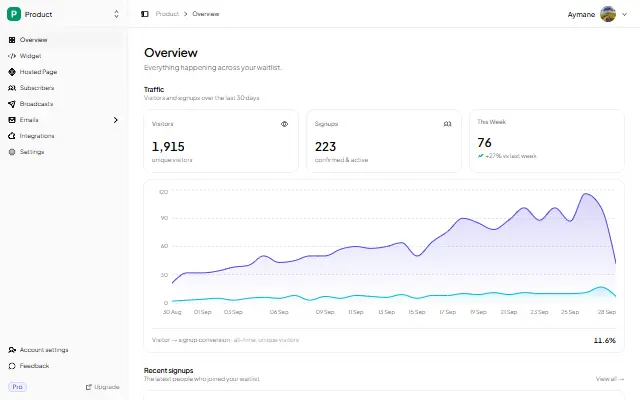
If you're building in public without a waitlist as a destination, you're leaving most of the value on the table. GetWaitly gives you an embeddable signup form, referral system, and subscriber management so every post you make can point to one place that captures the momentum.
FAQ
How to build in public as a solo founder?
Start by picking one platform where your target audience spends time — X (Twitter) or LinkedIn for most founders. Share one short update daily about what you're learning or building. Focus on lessons and struggles over feature announcements. Reply to others in your space. Set a destination for your audience (a waitlist or newsletter) so every post has a purpose. Commit to 90 days before evaluating results. The detailed playbook in the sections above covers what to share, how often, and which metrics to track.
I have zero followers. Where do I start?
Start by being useful, not interesting. Find conversations about your product's problem space on X or Reddit. Answer questions. Share your experience. Add value before you ask for attention. Your first 100 followers will come from being helpful, not from being loud.
How long until I see results?
Most founders see meaningful engagement within 4-8 weeks of consistent daily posting. Waitlist signups from social usually start flowing after 6-12 weeks when you have a small but engaged following. The first month feels like shouting into the void. Push through it.
Should I build in public if I'm not comfortable sharing?
Building in public doesn't mean sharing everything. You control the boundary. Share what's comfortable — technical lessons, industry observations, curated insights. You don't need to share revenue numbers or personal struggles. Transparency on your own terms still works.
What if my competitors are watching?
They probably are. That's fine. Most competitors won't act on what you share. And the benefits of building in public — trust, feedback, distribution — far outweigh the risk of someone copying a feature. Execution is harder than imitation.
What should I post when I have nothing to share?
Share the boring work. You always have something: a decision you made, a tool you tried, a mistake you fixed, a question you're stuck on, a small win. Your audience doesn't need breakthroughs — they want to watch a real person make progress. "Spent today on auth and it still doesn't work" is a post.
Is building in public worth it if I only have a few followers?
Yes — small and engaged beats large and passive. Ten people who reply, DM, and later join your waitlist are worth more than a thousand silent followers. Early on, your goal is 10-20 people who genuinely care about the problem you're solving, not reach.
Can building in public backfire?
Only in a few ways: oversharing things you'll regret (customer data, unannounced pricing, personal strain), treating it as a broadcast while ignoring replies, or letting the posting routine replace actually building. Set your boundary up front and treat engagement as the point, not the byproduct.
GetWaitly is the simple waitlist for founders and makers. Start free in 5 minutes → No credit card required.
Related guides
- How to Build a Referral Program That Grows Your Waitlist Before Launch — turning the audience you build in public into a referral-driven growth engine
- How to Build an Audience Before Your Product Is Ready — the audience-building framework that building in public feeds into
- How to Get Your First 100 Users — converting the audience you build in public into real users
- The Art of the Soft Launch — launching to the audience you built in public before going big
- What My First Paying Customer Taught Me About Launching — what the audience actually turns into when someone finally pays

written by
Aymane E.
Founder of GetWaitly. I write about validating ideas, pre-launch, and growth from building a waitlist tool as a solo founder.
Follow on X